Helping a dog who is afraid of the car
Fear, motion sickness or bad memories: go back to tiny steps and make the car predict good things.
 By Pawfessor Editorial TeamPublished 1 min read
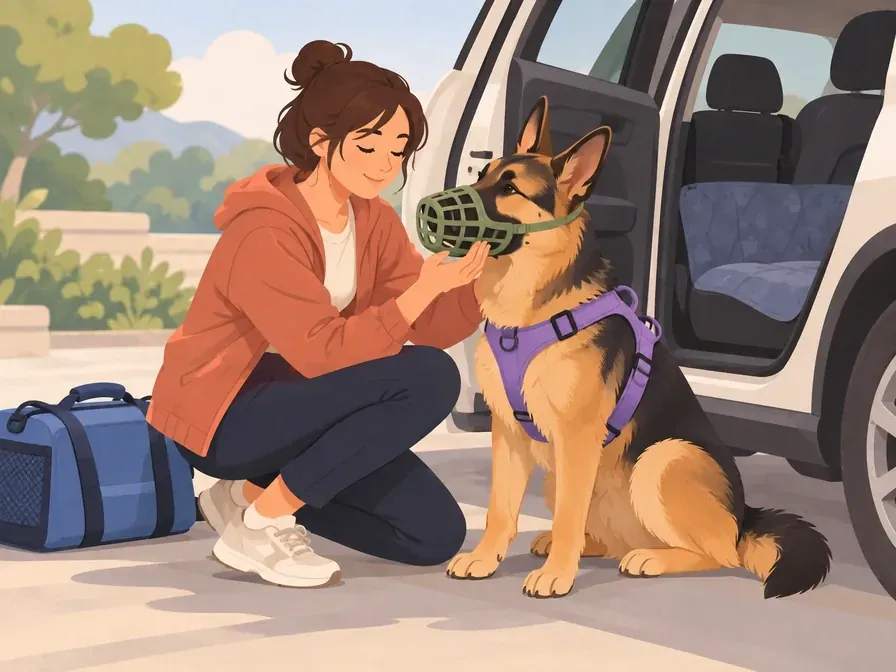
Some dogs love the car. For others it means nausea, the vet, or a scary first ride. Either way, you can change how your dog feels by going back to small, easy steps.
Scared or sick?
Drooling, lip licking and vomiting point to motion sickness. Trembling, panting, freezing or refusing to get in point to fear. Many dogs have both. Ask your vet about travel sickness: treating it makes training much easier.
Frequently asked questions
Is my dog scared or carsick?
Drooling, licking lips, yawning and vomiting suggest nausea; trembling, panting, trying to escape and refusing to get in suggest fear. Often it's both. Your vet can help with motion sickness.
How long does it take to get a dog used to the car?
From a few days to several weeks of short, positive steps. Go at your dog's pace.
Sources and further reading
- Pets in vehicles. American Veterinary Medical Association (AVMA).
Pawfessor programs for this

Keep reading
Helping a dog who is afraid of strangers
Why some dogs fear strangers and how to help: reading fear signals, giving space, the 'treat and retreat' game, visitors at home and when to get help.
Road trips with your dog
How to prepare for a road trip with your dog: car safety, a packing checklist, breaks, heat safety and keeping a nervous traveler calm.
Why your dog barks at night, and what helps
Common reasons dogs bark at night, including potty needs, noises, boredom and anxiety, and practical steps to help your dog sleep quietly.